In the Great Southern region of Western Australia, access to justice is shaped by distance, local infrastructure and the strength of community connections.
While the region differs from more remote areas, communities still experience challenges related to accessibility, coordination and navigating complex systems.
Improving access to justice requires approaches that are grounded in place and responsive to local realities.
Why Place Matters for Access to Justice
Across the Great Southern and regional WA, access to justice is influenced by:
- geographic spread across towns and regional centres
- varying access to transport and local services
- the need for coordination between legal and social support systems
- community-specific needs and local context
These factors highlight the importance of place-based service delivery and system design.
Collaboration Across Systems and Services
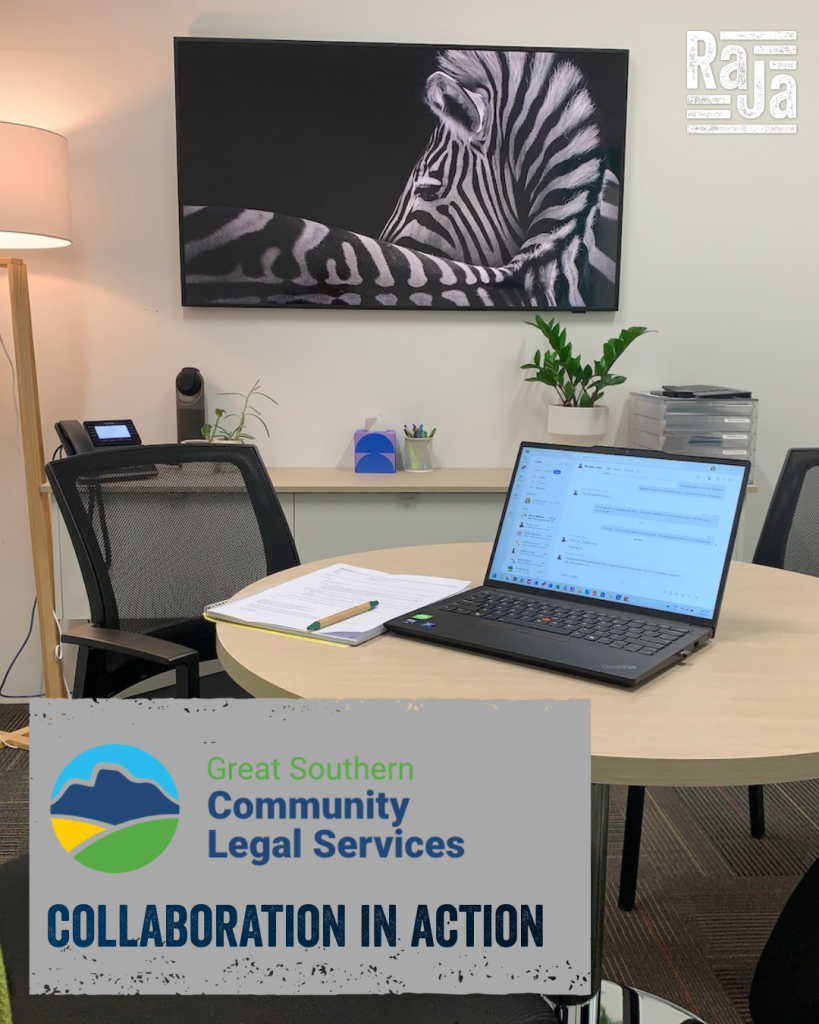
Collaboration strengthens how systems respond to community needs.
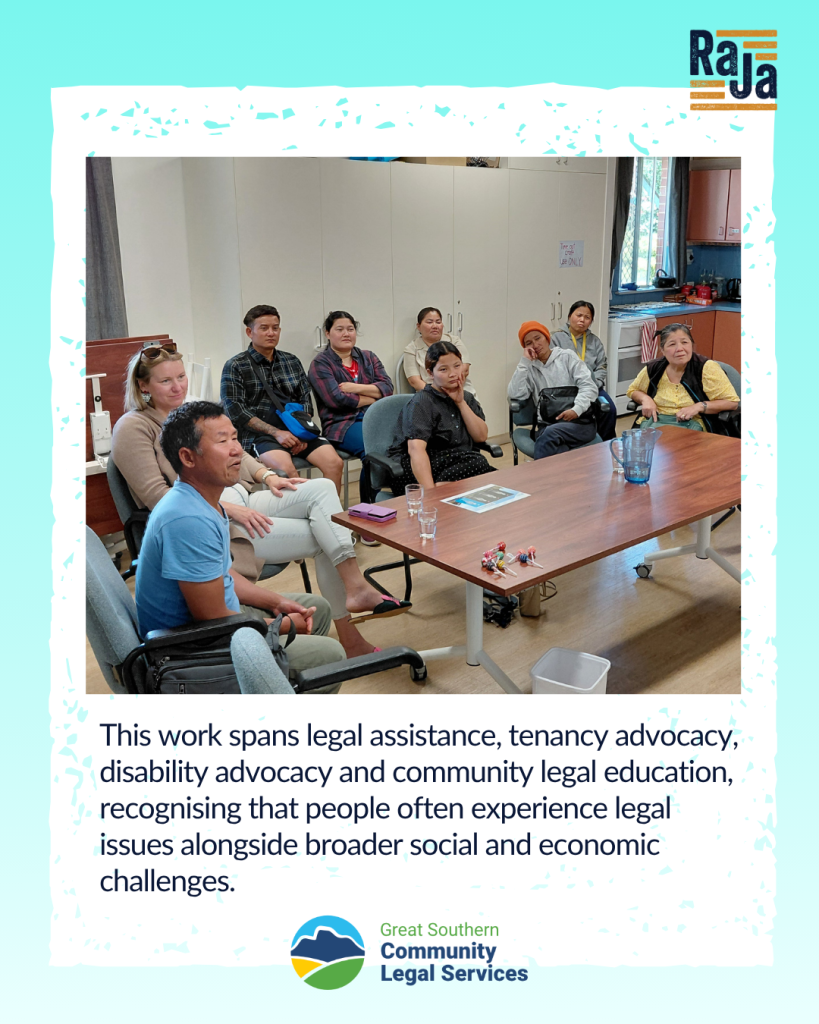
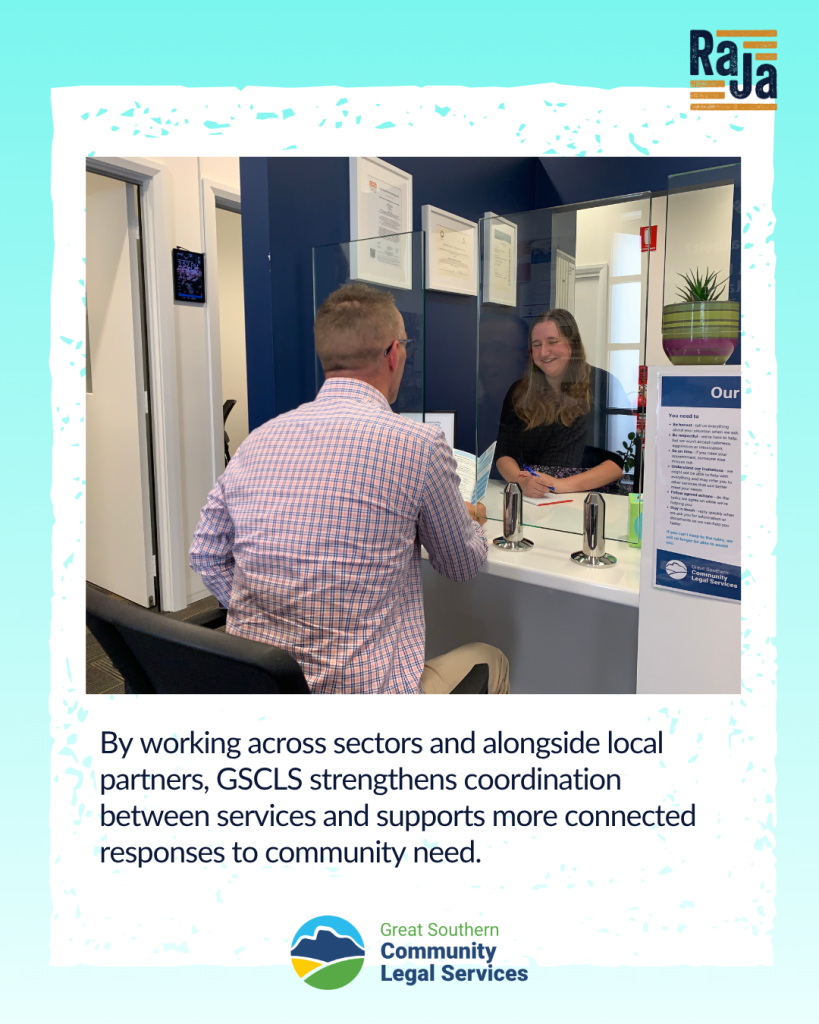
Through partnerships across legal, housing, youth and community services, organisations are able to provide more connected and coordinated support.

Supporting Access Through Outreach and Connection
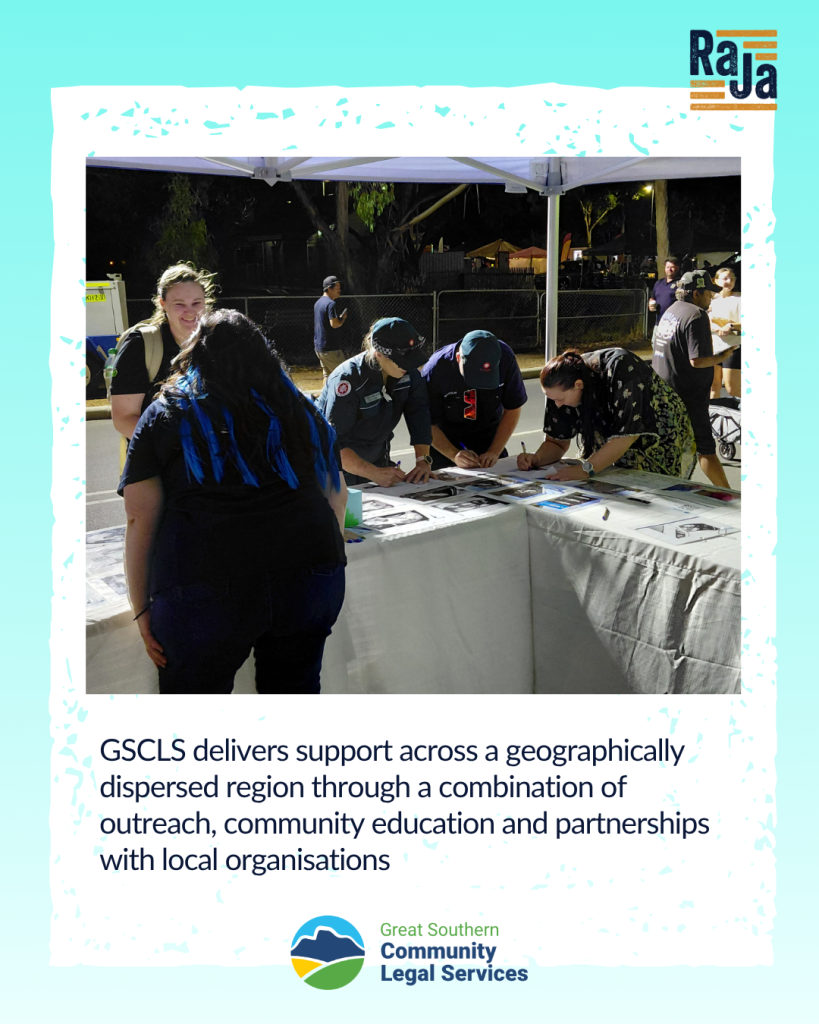
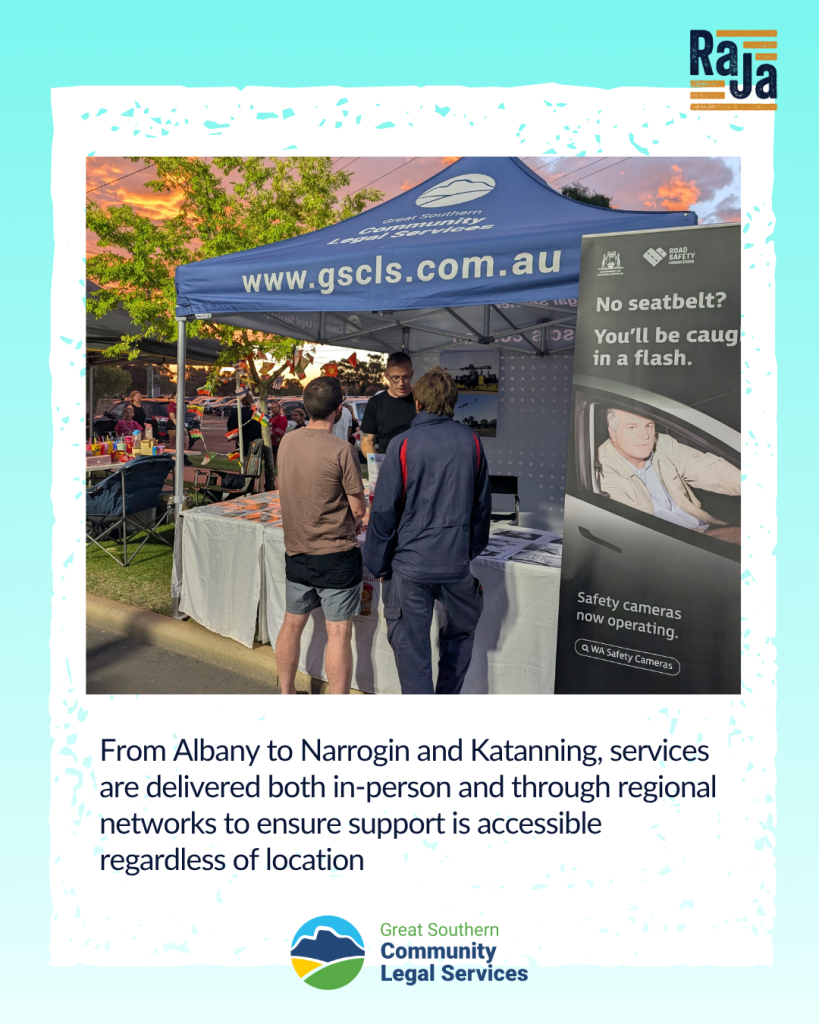
By delivering services within communities, organisations can:
- improve accessibility for people experiencing barriers
- provide earlier support and intervention
- strengthen relationships with local communities
- respond more effectively to local needs
This helps ensure that justice systems are visible, accessible and responsive.